DIY mistakes vs pro fixes: what UK florists do differently
If you have ever bought a mixed bunch, put it on the kitchen table, and wondered why it looked tired by the next morning, you are not alone. The gap between a quick home arrangement and a professional florist finish can be surprisingly wide. This guide breaks down DIY mistakes vs pro fixes: what UK florists do differently, so you can see where the real differences sit: flower choice, conditioning, mechanics, timing, delivery handling, and those small finishing touches that make an arrangement feel polished rather than a bit thrown together.
To be fair, most DIY flower arrangements are done with good intentions. The issue is usually not creativity. It is process. UK florists work with the same basic materials, but they handle them differently from the first trim of the stems to the final check before delivery. Once you understand that process, your own arrangements start lasting longer and looking much more intentional.
Table of Contents
- Why DIY mistakes vs pro fixes matter
- How the florist process works differently
- Key benefits and practical advantages
- Who this is for and when it makes sense
- Step-by-step guidance
- Expert tips for better results
- Common mistakes to avoid
- Tools, resources and recommendations
- Law, compliance, standards and best practice
- Options, methods and comparison table
- Case study or real-world example
- Practical checklist
- Conclusion
- Frequently Asked Questions
Why DIY mistakes vs pro fixes: what UK florists do differently Matters
The main reason this topic matters is simple: flowers are perishable, and they are unforgiving. A bouquet can look lovely for an hour and then collapse into something limp if it has been cut badly, packed too tightly, or left without enough water. That is where florists earn their keep. They are not just "making it prettier". They are managing a living product so it performs better.
In a UK setting, that matters even more because flowers often travel a little further than people realise, especially for next-day arrangements, office deliveries, or same-day gifting. The weather is another factor. A cold winter morning in Manchester, a warm train carriage in London, or a sunny windowsill at home can all change how quickly blooms open or fade. Small things matter. A lot.
DIY arrangements often fail for predictable reasons: stems are cut at the wrong angle, foliage sits below the waterline, the vase is too small, and the flowers are arranged before they have had time to drink. Professionals make fewer of these mistakes because they follow a repeatable method. And yes, the method is a bit boring to watch. But boring is often what keeps roses looking decent on day three.
Expert summary: florists are not simply "better at arranging". They are better at preparation, hydration, proportion, and handling. That is the real difference.
If you are sending flowers for a birthday, anniversary, sympathy occasion, or corporate reception, those differences show up fast. A poor DIY bouquet can look acceptable at first and then become awkwardly open, droopy, or uneven by evening. A professionally finished bouquet tends to hold shape longer and read more clearly from the room.
For readers who want the full journey from order to arrival, the practical details on delivery expectations and flower care guidance are worth checking. They help set realistic expectations, which is half the battle, really.
How DIY mistakes vs pro fixes: what UK florists do differently Works
At home, people usually start with the flowers they have, a vase they can find quickly, and a rough idea of how they want it to look. Florists start earlier than that. They think in stages: sourcing, conditioning, strip and cut, hydration, mechanics, shape, colour balance, and presentation. That is why their arrangements look calmer. There is less guesswork.
A typical professional workflow looks like this:
- Receiving and checking the flowers for freshness, stem strength, and bloom stage.
- Hydrating the stems properly before arranging, so they are not stressed from the start.
- Cleaning leaves and damaged petals that would otherwise shorten vase life.
- Building structure with height, focal flowers, and softer secondary blooms.
- Balancing proportion so the bouquet looks intentional from every angle.
- Finishing with tidy wrapping, water sources where needed, and secure packing.
DIY often skips two or three of those steps. Sometimes more. No judgement - we have all been there with a bunch of supermarket flowers and a knife that is a bit too blunt. But the skipped steps are exactly where the professional result comes from.
The biggest technical difference is usually stem conditioning. Florists refresh cuts with a sharp blade or scissors suited to the stem, remove leaves below the waterline, and place blooms into clean water quickly. They also know that some varieties are more fragile than they look. Tulips keep moving, gerberas can be a bit dramatic, and hydrangeas, well, hydrangeas will let you know when they are unhappy.
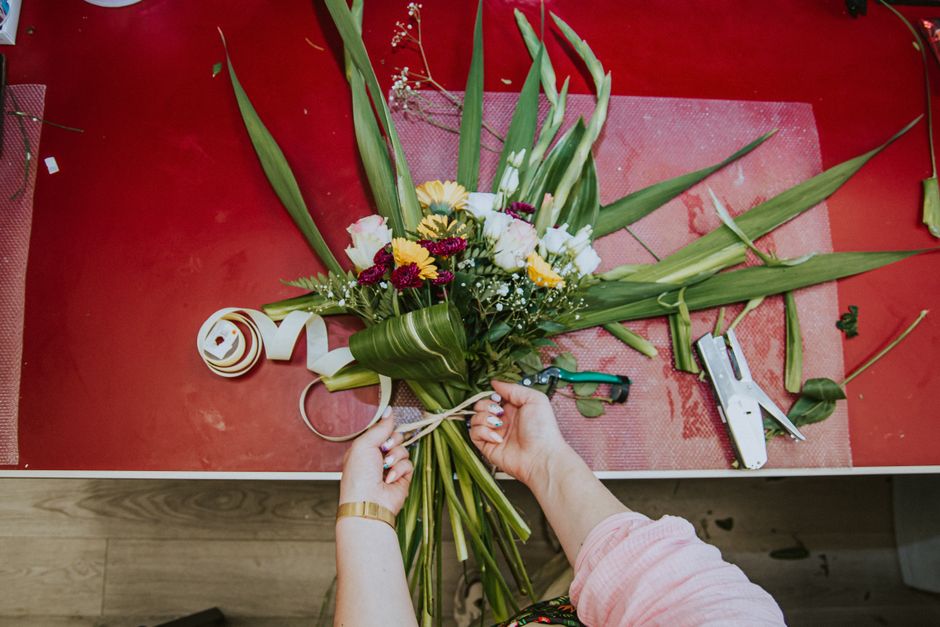
Another pro difference is design logic. DIY arrangements often focus on filling the vase. Florists focus on visual rhythm: a focal point, supporting flowers, space to breathe, and line work that guides the eye. That is why a professional arrangement can look effortless even when it is carefully controlled.
Key Benefits and Practical Advantages
Choosing a florist approach over a purely DIY one is not just about making things look fancy. The practical gains are very real.
- Longer vase life: cleaner stems, better hydration, and better handling usually mean blooms last longer.
- Better structure: arrangements are less likely to flop, collapse, or sit awkwardly in the vase.
- More accurate sizing: florists understand scale, so a bouquet suits the occasion and the container.
- Less waste: fewer flowers are damaged during prep because the process is more controlled.
- Clearer visual impact: professional arrangements read well from across a room, not just up close.
- Lower stress: if the flowers are for a specific moment, you are not gambling with timing.
For businesses, the advantage is even more obvious. Reception flowers, client gifts, and event displays need consistency. A lopsided arrangement in an office lobby can look a bit careless. A well-built bouquet quietly does its job and makes the whole space feel looked after.
There is also the trust element. When a florist offers clear product standards, care guidance, and service information, you know what you are getting. For a helpful overview of how a reputable florist frames its service, see about the florist and the site's guarantees page. That is especially useful if you are comparing options and want to avoid surprises.
Who This Is For and When It Makes Sense
This is for anyone who has ever thought, "I could probably do this myself," and then realised the roses have other ideas. More specifically, it helps:
- home arrangers who want their bouquets to last longer
- gift buyers trying to decide whether to DIY or order professionally
- brides, event planners, and family members handling flowers for a special day
- small businesses ordering regular arrangements for reception or client spaces
- people who care about value and want to avoid waste
DIY makes sense when the arrangement is informal, the flowers are inexpensive, or the occasion is not time-critical. A few garden stems in a jug? Lovely. A casual bunch for your own kitchen? Absolutely. But if the flowers are meant to impress, comfort, or represent your business, the margin for error gets smaller.
UK florists do not automatically choose "more flowers" to fix a weak design. Sometimes the smarter move is fewer stems, better placed. That is the sort of judgement that is hard to fake at home and, frankly, easy to spot once you know what to look for.
Step-by-Step Guidance
If you want to improve your own arrangements, use the same thinking florists use. You do not need a studio or a giant workbench. You need a clean process.
- Start with fresh flowers. Choose blooms with firm heads, healthy leaves, and stems that are not slimy or crushed.
- Clean your vase properly. Any residue shortens vase life. A quick rinse is not always enough.
- Trim stems at an angle. A fresh cut helps flowers drink more easily.
- Remove submerged leaves. Anything below the waterline will decay faster and cloud the water.
- Sort by structure. Keep focal flowers, filler flowers, and greenery in separate piles before you start.
- Build the shape gradually. Add the strongest stems first, then soften the outline with lighter blooms.
- Turn the arrangement as you work. Check all sides. A bouquet can look good from one angle and a bit lopsided from the other.
- Top up with clean water. Do not leave the vase half-empty and hope for the best. Hope is not a hydration strategy.
- Keep it cool. Avoid radiators, sunny windowsills, and draughty spots.
One very practical trick: make your bouquet slightly smaller than you think it needs to be. People often overfill the vase because empty space feels unfinished. In professional work, that space is usually doing design work. It gives shape, contrast, and movement.
If you are sending flowers rather than arranging them yourself, it helps to understand how the florist handles timing and transit. The pages on flower delivery and returns and refund information are useful because they show the practical side of service, not just the pretty pictures.
Expert Tips for Better Results
Here is where the pro fixes really start to show.
Work from the stem, not the bloom
Many DIY arrangements are built around flower heads first. Florists often think from the stem upward because stem length, angle, and condition determine the final shape. If the stems are weak or mismatched, the bouquet will always feel a bit off.
Use contrast, but not too much
Bright colours can be beautiful, but mixed without control they become noisy. Professionals balance strong hues with neutrals, greens, or a single anchor tone. It is a quiet trick, but it works.
Give flowers breathing room
Flowers look richer when they are not jammed together like commuters at King's Cross at 8.30 on a wet Tuesday. Space makes the arrangement feel more expensive, even when the materials are simple.
Match the vase to the job
A narrow vase supports tall stems. A low, wide bowl suits compact designs. The wrong container makes the florals fight the vessel. A good florist will think about that immediately; DIY often leaves it until the last minute.
Change the water early
Clean water matters more than most people think. Once bacteria build up, the bouquet starts declining even if it still looks fine. That is one of those annoying truths. Not glamorous, but there it is.
For customers who want care instructions that are simple and practical, the flower care advice on the site is a sensible reference point. It aligns well with what professionals actually do day to day.
Common Mistakes to Avoid
This section is where most of the DIY trouble starts. None of these mistakes are rare.
- Using blunt scissors or kitchen knives: crushed stems absorb water poorly.
- Leaving leaves below water: this speeds up decay and clouds the vase.
- Ignoring flower variety differences: not all stems behave the same, and some need more care than others.
- Overcrowding the vase: too many blooms create pressure and poor airflow.
- Skipping hydration time: flowers often need time to recover after transport or storage.
- Placing arrangements too warm: heat shortens the display life more quickly than many people expect.
- Guessing the size: a bouquet that is too large can look bulky, not luxurious.
Another common mistake is designing for the moment of unwrapping only. The arrangement may look impressive at first but fail after a few hours. Professionals design for the day after as well. That is a big difference, and it shows.
Also, a small confession: even seasoned flower buyers sometimes forget that the vase itself is part of the design. It is not just a holding tank. It changes the whole silhouette. Slightly annoying, but true.
Tools, Resources and Recommendations
You do not need a florist workshop to improve your results, but a few basic tools help enormously.
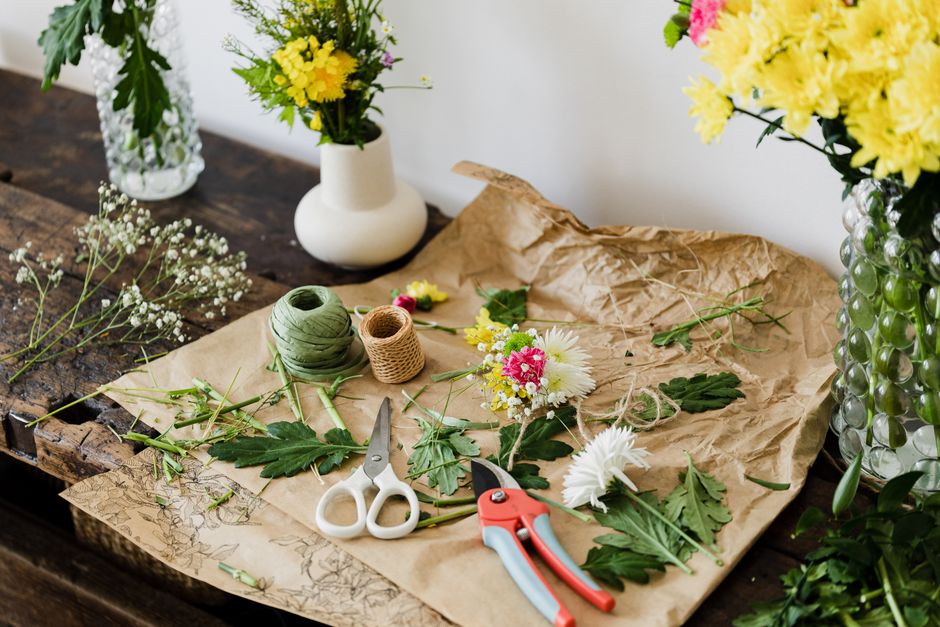
- Sharp floristry scissors or secateurs: cleaner cuts, less stem damage.
- Clean vase or container: the foundation of a longer-lasting arrangement.
- Floristry tape or twine: useful for simple structure in hand-tied bouquets.
- Bucket or bowl for conditioning: gives stems time to drink before arranging.
- Fresh water and a clean work surface: basic, but easy to overlook.
For readers buying flowers rather than arranging them, it is worth paying attention to service pages that explain how orders are handled. Useful references include payment information for smooth checkout expectations and contact details if you need to ask about an order before sending it.
If you are choosing a florist for repeat business use, it can also help to review the business background and broader values. The pages on corporate accounts and sustainability are useful for that kind of decision-making. Not because they are flashy. Because they show how the business thinks.
Law, Compliance, Standards, or Best Practice
For flower arranging itself, there is not one single rulebook that every home arranger must follow. Still, UK florists work within normal business standards that matter to customers: clear descriptions, honest product expectations, suitable handling of perishables, and fair treatment if something goes wrong. That is the practical side.
From a best practice perspective, florists usually pay attention to:
- accurate product representation
- safe handling of sharp tools and water containers
- clean working conditions for fresh goods
- clear delivery and customer-service information
- reasonable refund or replacement processes where applicable
If you are comparing suppliers, it is sensible to look for transparent policy pages rather than vague promises. The site's terms and conditions, guarantees, and privacy policy show the sort of clarity that helps customers make informed decisions. For accessibility-minded customers, the accessibility statement is also part of a trustworthy user experience.
It is fair to say that good floral practice is often less about formal regulation and more about reliability, hygiene, and clear communication. That is what customers remember.
Options, Methods, or Comparison Table
Here is a straightforward comparison of the DIY approach versus the florist approach. This is not about making one superior in every situation. It is about understanding where the trade-offs sit.
| Area | DIY at home | Professional florist approach |
|---|---|---|
| Flower preparation | Often quick, sometimes rushed | Conditioning, trimming, cleaning, and sorting first |
| Design method | Usually intuitive and improvised | Built around structure, balance, and proportion |
| Stem handling | May use blunt tools or uneven cuts | Cleaner cuts and better water uptake |
| Vase life | Variable | Usually more consistent |
| Finish | Can look casual or uneven | More polished and intentional |
| Best for | Informal home use, small budgets, creative play | Gifts, events, office displays, and important occasions |
The sweet spot for many people is somewhere in the middle. You can use florist methods at home without trying to become one. A cleaner cut, better vase, and more thoughtful spacing go a long way. Honestly, more than most people expect.
Case Study or Real-World Example
Imagine two people buying the same mixed bouquet on a Friday afternoon. One gets it home, trims the stems at random, keeps the lower leaves in the water, and places the vase by the window because the light looks nice. The arrangement looks cheerful at 6 p.m. By the next morning, a few blooms are leaning, the water is cloudy, and the bouquet feels tired.
The second person follows a florist-style routine. They recut the stems, strip the leaves, use a clean vase, add fresh water, and keep the flowers away from heat. The same bouquet holds its shape better over the weekend and still looks presentable on Monday. Nothing magical happened. Just a better process.
That is the real lesson in DIY mistakes vs pro fixes: what UK florists do differently. The flowers are not fundamentally different. The handling is.
We see this most clearly with gift orders. A bouquet arriving at a front door on a damp afternoon needs a bit of resilience. A florist prepares for that. The packaging, stem length, water source, and transit protection all matter. If you are sending flowers rather than handing them over in person, that service-side care is worth paying attention to.
Practical Checklist
Use this quick checklist before you arrange flowers at home or choose a florist service.
- Are the flowers fresh and firm?
- Do you have a clean vase ready?
- Have you removed leaves below the waterline?
- Have you trimmed the stems cleanly?
- Does the arrangement have a clear focal point?
- Is the vase the right size for the stems?
- Will the flowers be kept away from heat and direct sun?
- Do you know how long the bouquet should reasonably last?
- If ordering, are delivery details and policies clear?
- If it matters for the occasion, would a professional finish save time and worry?
Tick those off and you are already ahead of most rushed DIY setups. Simple, but effective.
Conclusion
The difference between DIY and professional floristry is not just style. It is handling, sequence, and judgement. UK florists spend their time on the parts that are easy to miss when you are doing flowers at home: hydration, stem care, proportion, packaging, and delivery-readiness. That is why the final result feels calmer, cleaner, and more reliable.
If your goal is a quick seasonal arrangement for the kitchen table, DIY can be joyful. If your goal is to make flowers last, look polished, and carry real weight in a gift or business setting, the florist approach wins for a reason. No drama, just better process.
And to be honest, once you see the difference, you will notice it everywhere: in the shape of the bouquet, the freshness of the water, even the way the flowers sit in the vase. Small things. Big difference.
Get a free quote today and see how much you can save.
For more on what to expect from a trusted florist and how orders are handled, you can also explore who we are and the flower delivery service.
Frequently Asked Questions
What is the biggest DIY mistake people make with flowers?
The most common mistake is poor stem preparation. People often forget to cut stems properly, remove leaves below the waterline, and place flowers in clean water quickly. That shortens vase life more than most people realise.
What do florists do differently from DIY arrangers?
Florists condition flowers before arranging them, build the design around structure and proportion, and handle stems in a more controlled way. They also think about transit, packaging, and the final presentation, not just the bouquet itself.
How can I make a DIY bouquet look more professional?
Use a clean vase, trim stems evenly, remove low leaves, and build the bouquet gradually. Keep a clear focal point and give the flowers some breathing room rather than packing them tightly.
Why do professional bouquets last longer?
Usually because they are better prepared. Cleaner cuts, better hydration, fewer damaged stems, and more suitable flower combinations all help the arrangement stay fresher for longer.
Is it worth paying a florist for special occasions?
Usually, yes, if the flowers need to impress, arrive on time, or hold up for a few days. For birthdays, anniversaries, sympathy flowers, and business use, the reliability is often worth it.
Can I use supermarket flowers and still get a florist-style result?
Yes, to a point. Fresh supermarket flowers can look very good if you clean the vase, recut the stems, remove excess foliage, and arrange them with more care. The finish may still differ, but the result can be much better.
What flowers are hardest to handle in DIY arrangements?
Delicate stems and blooms that react quickly to heat or dehydration tend to be trickier. Hydrangeas, tulips, and some soft-headed flowers need more careful handling than hardy varieties.
How soon should I put flowers in water after buying them?
As soon as possible. The less time flowers spend out of water, the better. If you cannot arrange them immediately, keep them in a cool place and recut the stems before placing them in water.
What should I look for when choosing a florist in the UK?
Look for clear service information, useful care guidance, transparent policies, and a site that explains delivery and customer support properly. Those details usually tell you a lot about how the business operates.
Do florists design differently for home delivery compared with hand-tied gifts?
Yes. A bouquet intended for delivery usually needs sturdier packing and more careful stem hydration. Florists think about movement, temperature, and presentation during transit, which is part of the professional difference.
What is the simplest pro-level fix I can use at home today?
Use a clean vase and make fresh angled cuts before arranging anything. That one change alone can improve water uptake and make a surprising difference to how long your flowers last.
Where can I learn more about care, delivery, and service expectations?
It helps to review the florist's care and service pages, especially flower care, delivery information, and returns and refund guidance. That gives you a clearer picture before you order.